





Maintenance Checklist for High Frequency Power Inverter Installations
- Why regular maintenance matters for power systems
- Reliability, uptime and failure modes
- Safety, compliance and warranties
- Data-driven decision making
- Standard maintenance checklist (visual & electrical)
- Daily/weekly quick checks
- Monthly inspections
- Quarterly electrical tests
- Cooling, thermal management and power components
- Fans, heatsinks and airflow
- Electrolytic capacitors and passive component aging
- EMI/RFI filters and surge protection
- Troubleshooting, diagnostics and firmware
- Interpreting alarms and fault codes
- Waveform and harmonic analysis
- Firmware, configuration and cybersecurity
- Battery systems, PV integration and load management
- Battery health and BMS integration
- PV array checks for inverter-coupled systems
- Load profiling and soft-start settings
- Maintenance schedule & parts replacement matrix
- Documentation, spare parts and service planning
- Recommended spare parts list
- Record keeping and maintenance logs
- Service contracts and OEM support
- Manufacturer profile and why partner with Guangzhou Congsin
- About Guangzhou Congsin Electronic Technology Co., Ltd.
- Manufacturing capability, compliance and innovation
- Global reach and support offerings
- Common failure scenarios and how maintenance prevents them
- Capacitor failure and ripple-induced stress
- Cooling failure leading to thermal shutdowns
- Grounding and surge damage
- Practical checklist (quick reference)
- Frequently Asked Questions (FAQ)
- 1. How often should I perform a full inspection on a high frequency power inverter?
- 2. Can I clean inverter internals while the system is live?
- 3. What are the common causes of inverter overheating?
- 4. How do I detect capacitor degradation without full disassembly?
- 5. Is firmware maintenance necessary for all inverters?
- 6. What documentation should I keep after each maintenance visit?
- Contact, product info and next steps
This maintenance guide provides a concise, actionable checklist for maintaining high frequency power inverter installations. It is designed for system owners, technicians, and facility managers who need to maximize reliability, safety and life expectancy of DC→AC converters used in solar systems, mobile power applications and off-grid installations. The checklist covers visual and electrical inspections, cooling and airflow, EMI/surge protection, battery and PV system integration, firmware and control verification, record-keeping and parts replacement strategies; all recommendations reference industry practice and authoritative sources to support verification and compliance.
Why regular maintenance matters for power systems
Reliability, uptime and failure modes
High frequency power inverters—characterized by high switching speeds and compact magnetics—offer high power density and good efficiency but can be sensitive to thermal stress, capacitor aging, EMI and poor grounding. Regular maintenance reduces sudden failures, prevents downstream equipment damage, and preserves inverter efficiency and power quality. For background on inverter technology, see Wikipedia: Inverter (electrical).
Safety, compliance and warranties
Many safety and warranty conditions depend on routine maintenance. Compliance with directives and standards (CE/EMC/LVD, ETL/UL marks) often requires documented maintenance and periodic inspections. Check manufacturer guidance and local electrical standards; authoritative information on energy system best practices is available at the U.S. Department of Energy Solar Inverters overview.
Data-driven decision making
Using measurable checks—thermal imaging, insulation resistance, AC waveform analysis—allows predictive maintenance rather than reactive. Logged trends (temperature, harmonic distortion, runtime hours) support replacement planning and spare-parts stocking.
Standard maintenance checklist (visual & electrical)
Daily/weekly quick checks
These are brief, low-effort checks suitable for operations staff or first responders:
- Confirm inverter status LEDs and alarms—note and log any warnings.
- Check ambient temperature and ensure cooling air paths are not blocked.
- Listen for abnormal noises (fans, relays) during normal operation.
Monthly inspections
Perform a more detailed inspection each month:
- Visual inspection for loose terminals, corrosion, discoloration or moisture ingress.
- Verify cable strain relief and torque on AC/DC screw terminals per manufacturer torque spec.
- Confirm firmware/software version and recent alerts in the event log.
Quarterly electrical tests
Tests that require trained technicians and basic test instruments:
- DC input voltage and ripple measurement under load.
- AC output voltage, frequency, and THD (total harmonic distortion) using a power quality analyzer.
- Insulation resistance (megger test) on DC input/cabinet to earth where applicable, following safety procedures.
Cooling, thermal management and power components
Fans, heatsinks and airflow
High switching frequency designs concentrate heat in smaller packages—effective cooling is essential. Clean fan intakes, remove dust from heatsinks with compressed air or vacuum, and replace cooling fans per the manufacturer’s MTBF guidance or when vibration/noise increases. Use thermal imaging cameras to identify hotspots on power components and busbars.
Electrolytic capacitors and passive component aging
Electrolytic capacitors, especially in inverters, age with temperature and ripple current exposure. Typical electrolytic capacitors used in power converters have lifetimes that drop significantly above 60°C (see Wikipedia: Capacitor). Plan replacements every 5–10 years depending on measured ESR, operating temperature and ripple current history.
EMI/RFI filters and surge protection
Check input and output filters, surge arrestors and MOVs. Replace components showing discoloration, cracks or changed electrical characteristics. Confirm that grounding electrodes are intact and have low resistance to earth to limit transient voltages during lightning or switching events.
Troubleshooting, diagnostics and firmware
Interpreting alarms and fault codes
Use the inverter’s fault and event logs to identify patterns (overtemperature, overcurrent, DC undervoltage, islanding faults). Cross-reference codes with manufacturer documentation to determine if issues are hardware, environmental, or configuration-related.
Waveform and harmonic analysis
High frequency inverters normally provide a stable AC waveform (pure sine wave or modified sine wave depending on model). For sensitive loads, measure harmonic distortion and power factor. If distortion or voltage sag appears under load, investigate capacitor health, semiconductor switching performance and control-loop stability.
Firmware, configuration and cybersecurity
Keep inverter firmware and communication modules up to date to address reliability fixes and cybersecurity vulnerabilities. Maintain a change log and test firmware upgrades in a controlled environment. Disable or secure unused communication ports and use secure credentials for remote monitoring systems.
Battery systems, PV integration and load management
Battery health and BMS integration
If the inverter couples to batteries, integrate checks for battery state-of-charge, conductivity, voltage spread among parallel strings and temperature. Use the battery management system (BMS) alerts to trigger maintenance: equalization charges, cell replacements or balancing. Poor battery health increases inverter stress (higher ripple current and thermal cycles).
PV array checks for inverter-coupled systems
Inspect PV wiring, combiner boxes, fuses and DC isolation devices. Verify PV string open-circuit voltages and short-circuit currents under clear-sky conditions for consistency with data. Confirm MPPT behavior if the inverter includes a solar charge controller or is paired with an external MPPT.
Load profiling and soft-start settings
Review load characteristics: inductive motor starts, large capacitor bank switching, or nonlinear loads increase stress on inverters. Use soft-start and ramp settings where available and schedule high inrush loads to avoid simultaneous starts.
Maintenance schedule & parts replacement matrix
Use the table below as a baseline; adapt intervals to the actual environment (temperature, dust, humidity), load profile and manufacturer recommendations.
| Task | Frequency | Notes / Acceptance Criteria |
|---|---|---|
| Visual inspection & LED/alarm check | Weekly | No active faults; LEDs green or within normal status messages |
| Fan and air path cleaning | Monthly (or more in dusty sites) | Fans spin freely; airflow within specification; fan vibration within normal range |
| AC/DC terminal torque & wiring check | Quarterly | No loose terminals; torque within manufacturer spec; no discoloration |
| Power quality measurement (V, Hz, THD) | Quarterly | Voltage within ±5% nominal; THD per spec (typically <5% for pure sine models) |
| Insulation resistance (megger) | Yearly | Resistance above manufacturer min (often >1 MΩ depending on system) |
| Capacitor ESR/visual check | Every 3–5 years | ESR within spec; no bulging or leakage |
| Firmware & event log review | Annually (or as updates released) | Firmware up to date; critical alerts resolved |
Documentation, spare parts and service planning
Recommended spare parts list
Maintain a small inventory of critical spares to minimize downtime: fan modules, fuses/breakers, DC contactors, surge protection devices, electrolytic capacitors and a communications module if removable. Keep serial-numbered archival copies of firmware and calibration certificates.
Record keeping and maintenance logs
Log every inspection, measurement and corrective action with timestamps and technician initials. Maintain before/after photos, thermal images and waveform captures. These logs support warranty claims and trend analysis for predictive maintenance.
Service contracts and OEM support
Establish a service contract with the inverter manufacturer or a certified service partner for annual or semi-annual inspections, firmware updates and warranty repairs. OEM/ODM channels often provide faster RMA and parts availability than third-party vendors.
Manufacturer profile and why partner with Guangzhou Congsin
About Guangzhou Congsin Electronic Technology Co., Ltd.
Guangzhou Congsin Electronic Technology Co., Ltd., founded in early 1998, is a professional power inverter manufacturer with over 27 years of focused experience. We design, R&D and manufacture a wide range of power solutions—with a core emphasis on DC→AC power inverters, portable power stations, and solar charge controllers. Our catalog includes 100+ models tailored for vehicles, solar systems, RVs and trucks, off-grid homes, outdoor offices, patrol and field construction work.
Manufacturing capability, compliance and innovation
Congsin operates fully automated production lines, advanced instrumentation and multifunctional testing equipment to ensure product reliability, efficiency and intelligent functionality. Environmental and safety compliance are built in: our quality system is ISO9001 certified and many products hold international approvals such as CE, EMC, LVD, ETL, FCC, RoHS and E-MARK. Several independently developed patents further demonstrate our commitment to innovation.
Global reach and support offerings
Congsin’s products serve global markets across Europe, the Americas, the Middle East, Africa and Southeast Asia; many models are supplied to domestic and international OEM channels. Our support includes OEM/ODM, private labeling, distribution and bespoke customization to meet partner specifications. Core product lines include Solar Charge Controllers, modified sine wave inverters, pure sine wave inverters, and portable power stations—designed to facilitate energy independence and robust off-grid solutions.
Common failure scenarios and how maintenance prevents them
Capacitor failure and ripple-induced stress
Symptoms: increased ripple voltage, higher operating temperature, audible coil hum, and eventual inability to maintain AC waveform. Prevention: ESR testing, thermal monitoring, scheduled capacitor replacement based on hours and operating temperature.
Cooling failure leading to thermal shutdowns
Symptoms: repeated overtemperature alarms, reduced output power or inverter derating. Prevention: fan and air filter schedule, redundancy in forced-air cooling, and recalibration of thermal cutoff thresholds per environment.
Grounding and surge damage
Symptoms: non-recoverable inverter faults after storms, erratic tripping. Prevention: proper earthing (low-resistance ground), surge protective devices on AC and DC sides, periodic verification of grounding continuity.
Practical checklist (quick reference)
- Weekly: LED/alarm check, ambient temp, audible checks.
- Monthly: Clean fans/heatsinks, inspect cables and terminals.
- Quarterly: Torque terminals, power quality measurements, event log review.
- Yearly: Insulation resistance, firmware audit, thermal imaging survey.
- Every 3–5 years: Replace electrolytic capacitors as preventive maintenance if ESR rises.
Frequently Asked Questions (FAQ)
1. How often should I perform a full inspection on a high frequency power inverter?
Full inspections (including electrical tests, insulation resistance and thermal imaging) should be performed at least annually. Environments with high dust, salt or temperature should increase frequency to quarterly or semi-annually.
2. Can I clean inverter internals while the system is live?
No. Always follow lockout/tagout and isolate DC and AC sources before opening the inverter cabinet. Compressed-air cleaning near live terminals risks arc faults and should be avoided.
3. What are the common causes of inverter overheating?
Blocked airflow, failed fans, high ambient temperature, overloaded operation, and degraded capacitors or heatsink thermal interface materials. Thermal imaging helps pinpoint the source quickly.
4. How do I detect capacitor degradation without full disassembly?
Measure ESR and ripple current under load, monitor operating temperature, and look for bulging or electrolyte leakage. Rising output ripple and higher-than-normal operating temperature are practical indicators.
5. Is firmware maintenance necessary for all inverters?
Yes—firmware updates often include fixes for efficiency, stability and cybersecurity. However, validate updates in a test environment for complex systems before deploying to production to avoid unexpected behavior.
6. What documentation should I keep after each maintenance visit?
Record date/time, technician, serial numbers, firmware version, measured values (voltages, THD, temperature), photos/thermal images, parts replaced, and next scheduled maintenance date.
Contact, product info and next steps
For turnkey inverter solutions, maintenance contracts, OEM/ODM inquiries or to view product specifications for high frequency power inverter models, contact Guangzhou Congsin Electronic Technology Co., Ltd. Our engineering team can provide service plans, spare-parts kits and site-specific commissioning guidance. Visit our product pages or request a quotation to ensure your installation benefits from professional-grade maintenance and long-term reliability.
For consultation, maintenance service packages, or to explore our range of Solar Charge Controllers, modified sine wave inverters, pure sine wave inverters and portable power stations, contact Guangzhou Congsin Electronic Technology Co., Ltd. today to schedule a site assessment or request product datasheets.
Top 10 bidirectional battery inverter Manufacturers and Supplier Brands
How to Choose High-Efficiency Vehicle Power Inverters
Top Off-Grid Solar Inverters for Homes, Cabins and RVs
How to size an off-grid solar inverter for your battery bank
Modified Sine Wave Inverters
Can I customize the logo?
Yes, OEM/ODM service is available.
Is customization available?
OEM/ODM support for logo, color, and packaging design.
What devices can this inverter power?
Rated for 600W, peak 1000W. Recommended to use devices under 80% of rated capacity.
What is the function of the independent control switch?
The independent control switches for DC and AC can respectively control the on and off of DC and AC circuits, facilitating the separate management of power supply for different types of devices and improving power usage safety and flexibility.
Pure Sine Wave Inverters
Can it drive a 3P air conditioner and an electric oven at the same time?
Total power needs to be calculated: the rated power of a 3P air conditioner is about 2200W-2500W, and the electric oven is about 1500W-2000W. The total power is 3700W-4500W, which exceeds the 3000W continuous power, so simultaneous use is not recommended; if used alone, the 6000W peak can meet the startup needs of both, and the battery capacity must be ≥200Ah (12V) when used alone.
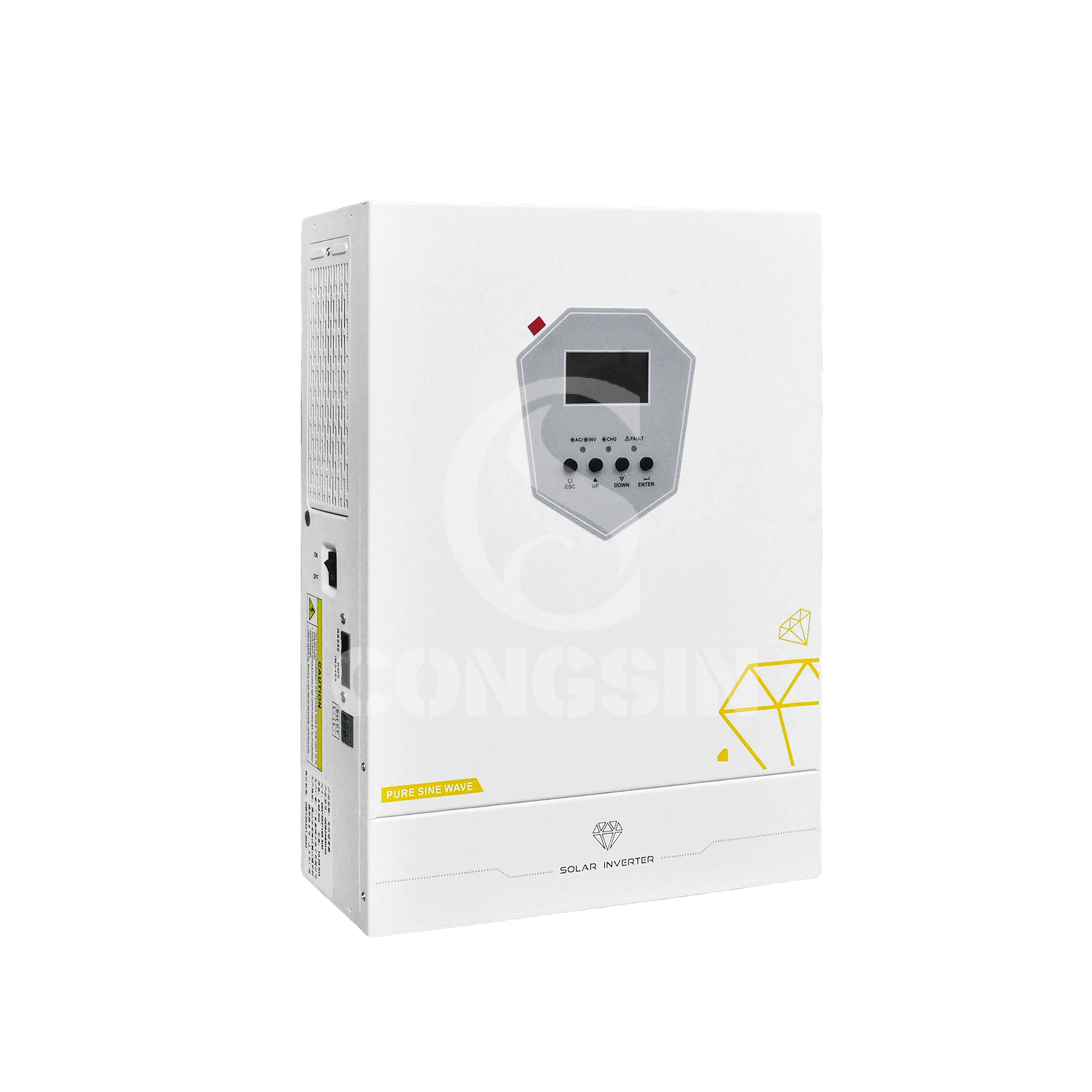
Factory Direct Sales 6000W Hybrid Solar Power Inverter with Controller and LCD Display
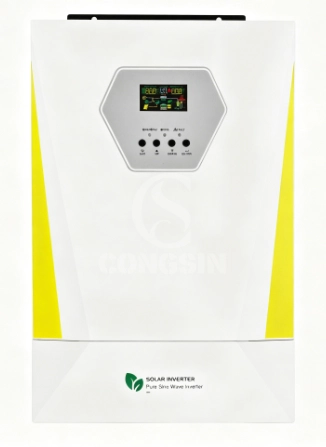
Congsin 4000W and 6000W Hybrid Inverter with Controller with LCD Display and CE Certification Solar
Power your solar system efficiently with the Congsin 4000W and 6000W Hybrid Inverter. Featuring an integrated MPPT Controller, this CE Certified inverter ensures optimal energy conversion. Monitor performance effortlessly via the intuitive LCD Display. Reliable, powerful, and ready for your sustainable energy needs.
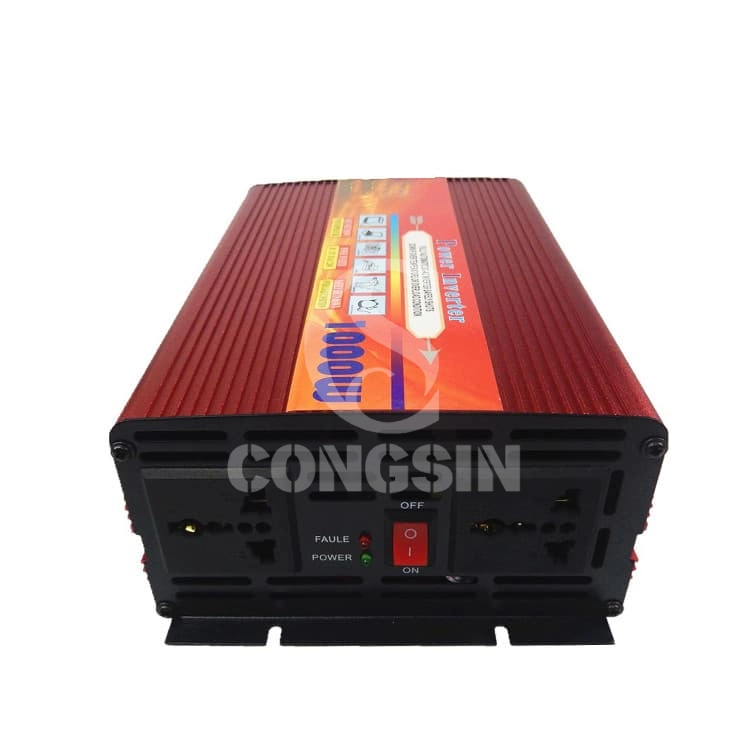
Congsin Manufacturer Wholesales Big Capability Modified Sine Wave Inverter with Red case and Double fan
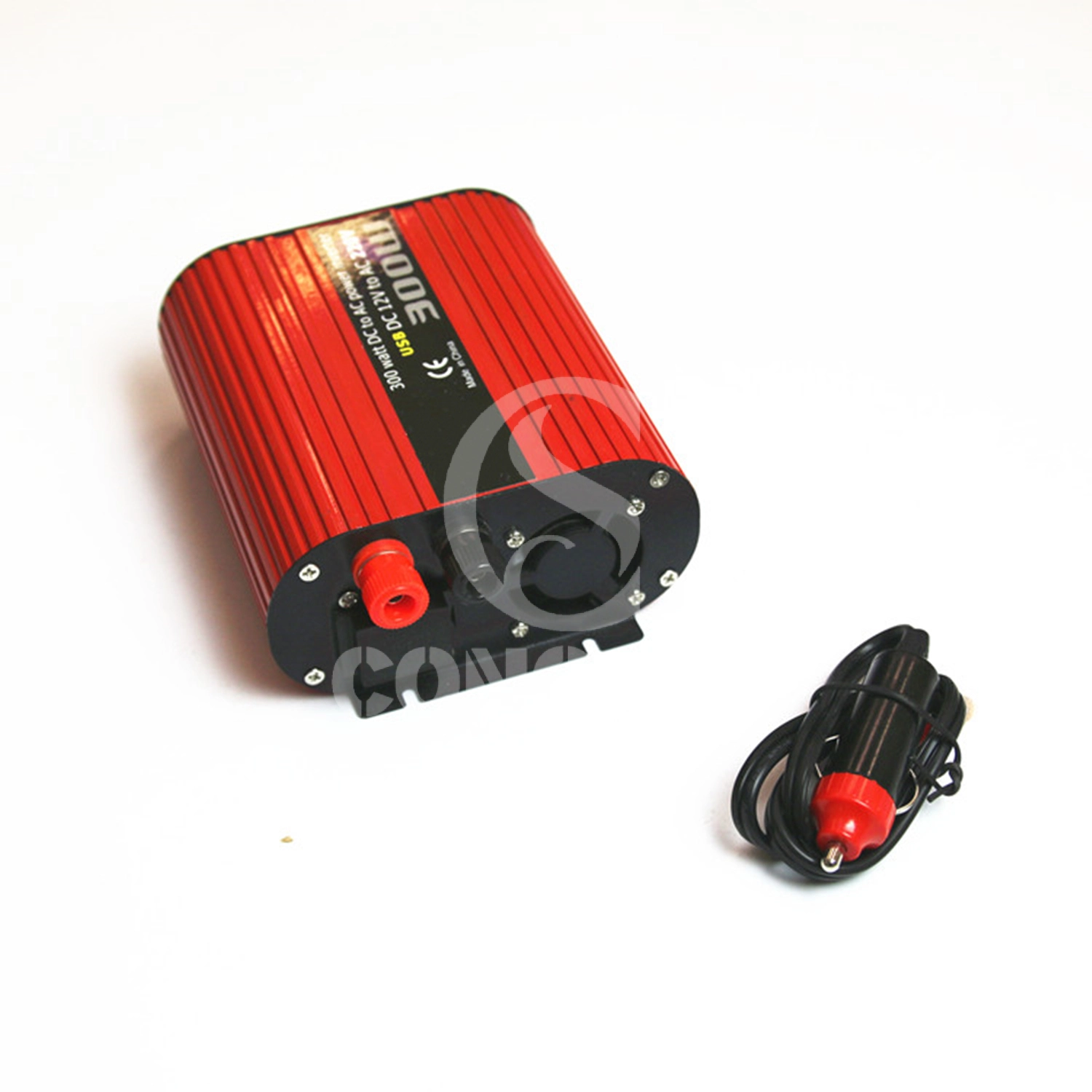
Factory Direct Sales Portable 150W Modified Sine Wave Inverter DC12V to AC220V Off-grid Sine Wave Inverter with Two USB and Universal Socket
Congsin's Portable 150W Modified Sine Wave Inverter powers your journey! This versatile Car Power Inverter with USB acts as a reliable 12V to 220V converter, ensuring an essential off-grid power supply. With dual USB ports and a universal socket, enjoy convenient power on the go.

CONGSIN is a trusted OEM factory for power inverters, solar charge controllers, and DC converters. Reliable solutions for global B2B buyers.
 High Quality
 7/24 Service
 Guaranteed Warranty
© 2025 Congsin. All Rights Reserved.
 WeChat
 Scan QR Code
sin cong
teaimei10
Whatsapp: +8618028086791
Scan QR Code